
Denied claims are revenue you already earned, walking out the door. For this hospital system, the revenue cycle leaked at every seam. Claims went out with errors, came back denied, and sat in queues while staff reworked them by hand. Denials that could have been appealed often weren't, simply because no one got to them in time.
The work was endless and reactive. Billers chased yesterday's denials instead of preventing tomorrow's, A/R days climbed, and a real slice of earned revenue was quietly written off as the cost of doing business.
The challenge
Could the revenue cycle largely run itself, catching errors before claims go out and working denials the moment they come back? The system needed scale and consistency, but also a way to keep humans firmly in charge of the cases that genuinely need judgment.
The approach
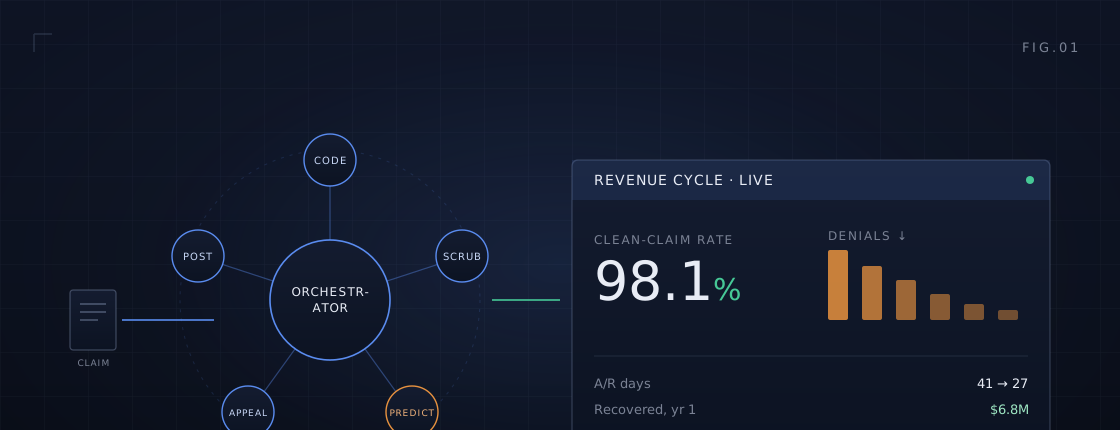
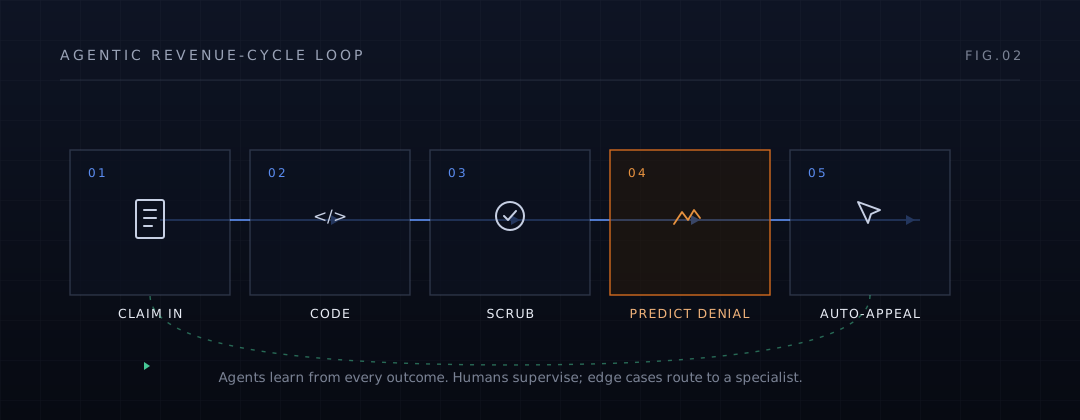
We architected an agentic platform: a set of specialized AI agents, coordinated by an orchestrator, each owning a stage of the cycle. One agent codes the encounter. Another scrubs the claim against payer rules. A prediction model flags the claims most likely to be denied before they are submitted, and an appeals agent drafts and files the response when a denial does land. Humans supervise and take the genuinely hard cases; the agents handle the volume.
The agents handle the thousand routine claims. The people handle the ten that actually need them.
The outcome
The clean-claim rate climbed into the high nineties, denials fell by a third, and A/R days dropped sharply as claims went out right the first time and appeals stopped expiring unworked. In its first year the platform recovered millions in revenue that the old, manual cycle had been quietly losing.
The cheapest denial is the one that never happens. Earned revenue stopped slipping away.
The platform gets better as it runs. Every approval and denial sharpens the prediction models, so the system that recovered revenue this year is positioned to leak even less the next.