Everyone wanted the frontier model. No one could send it the chart. This multi-state network saw what large public LLMs could do with clinical text: summarize a sprawling chart, surface what matters, draft the first version of a dozen documents. The catch was non-negotiable. You cannot put protected health information into a public API and stay compliant, full stop.
Building a private model for every use case was expensive and slow. The network wanted frontier capability without frontier risk, and without a multi-million-dollar infrastructure project to get there.
The challenge
Could a public LLM read the chart and do real work without ever seeing a piece of information that could identify a patient? The answer had to satisfy not just the engineers but the compliance team, on demand, in writing.
The approach
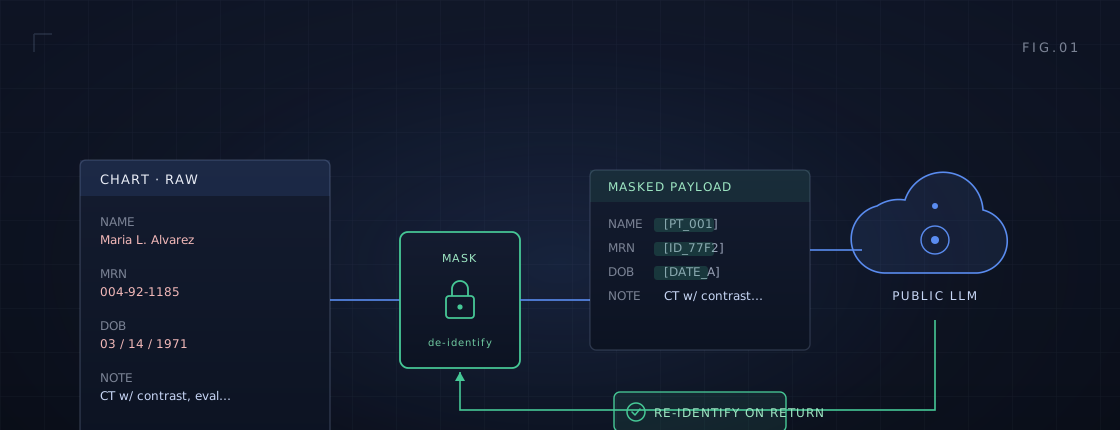
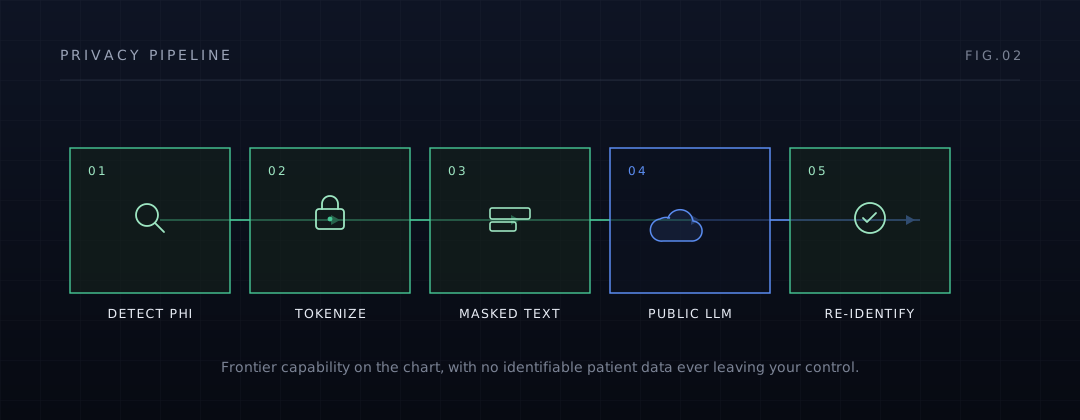
We separated the medicine from the identity. Before anything reaches the model, a detection layer finds every piece of PHI in the record and replaces it with a consistent token. The masked text, still clinically complete, goes to the public LLM. When the answer comes back, the same tokens are swapped for the real values inside the network. The model does the reasoning; it never sees a name, a number, or a date that points to a person.
The model read the medicine. It never met the patient.
The outcome
The network got the capability it wanted at a fraction of the cost and time of a private build. Chart review and summarization that used to eat hours got far faster, millions of records were processed safely, and compliance had a clean answer to the only question that mattered: nothing identifiable ever left.
You don't have to choose between the best model and the patient's privacy. Mask the identity, keep the medicine.
The same pipeline now sits in front of a dozen use cases, each inheriting the same guarantee. As stronger public models arrive, the network can adopt them without touching its privacy posture.