
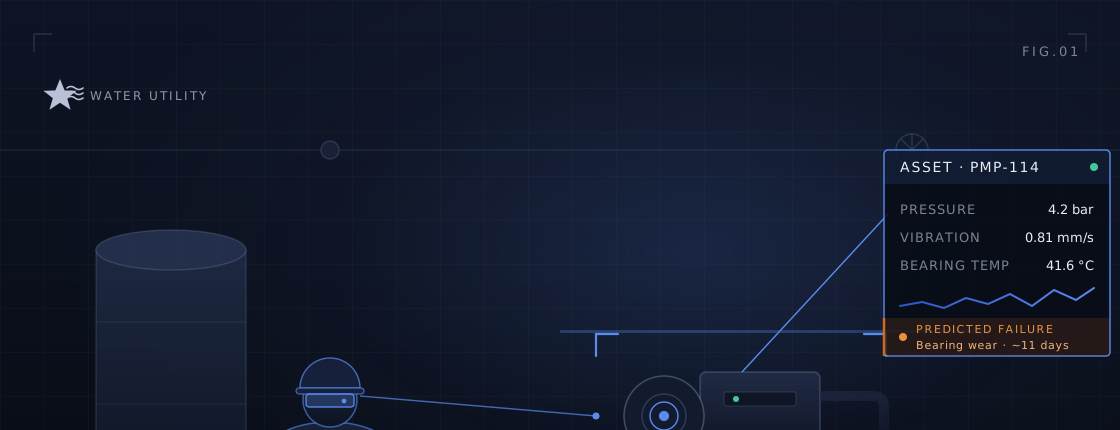
A water utility never sleeps. The utility runs treatment and distribution infrastructure that has to perform every hour of every day, across facilities spread over hundreds of miles, much of it built decades ago. Keeping it running meant sending experienced engineers to drive between plants, clipboard in hand, to inspect equipment that mostly looked fine right up until it didn't.
The senior people who could read a pump by its sound and vibration were the same people stuck in a truck for three hours a day. Knowledge was trapped in travel, inspections were periodic rather than continuous, and the first sign of many failures was the failure itself.
The challenge
The utility came to us with a deceptively simple question. Could an expert inspect a plant without being in the plant, and could the plant tell us when something was about to break? The constraints were not simple at all. Equipment from five decades and a dozen vendors. Facilities with patchy connectivity. A safety-critical, regulated environment where "move fast and break things" is exactly the wrong instinct. And a workforce that, rightly, would not trust a black box.
The approach
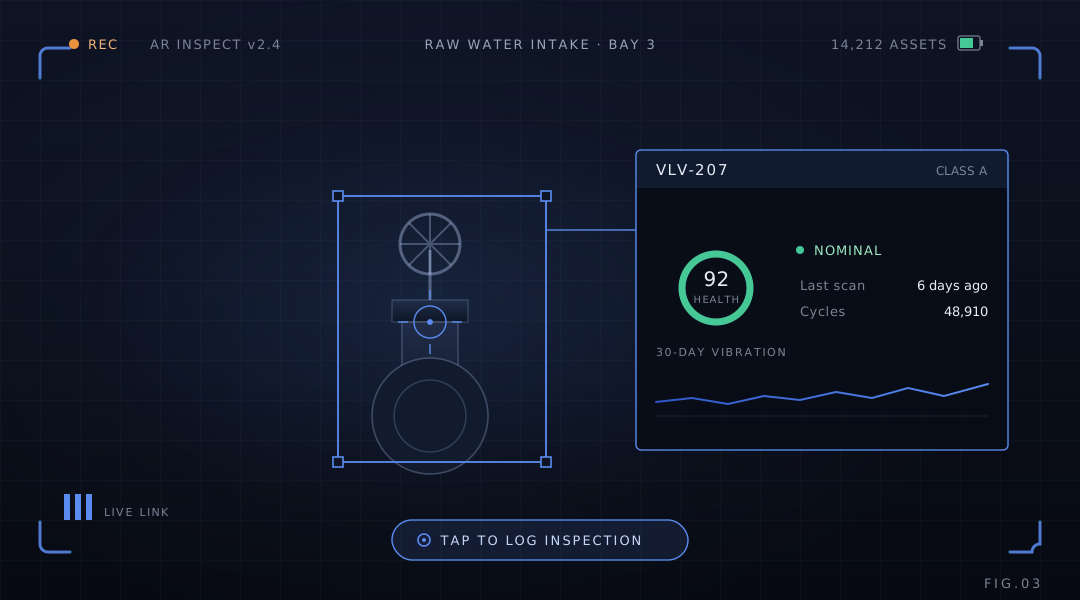
We didn't start with a headset. We started in the field, walking real inspection routes with real technicians to learn what an expert actually looks at, listens for, and writes down. Only then did we design AquaSight AR, a platform that captures that expertise, makes it remote, and puts a predictive layer underneath it.
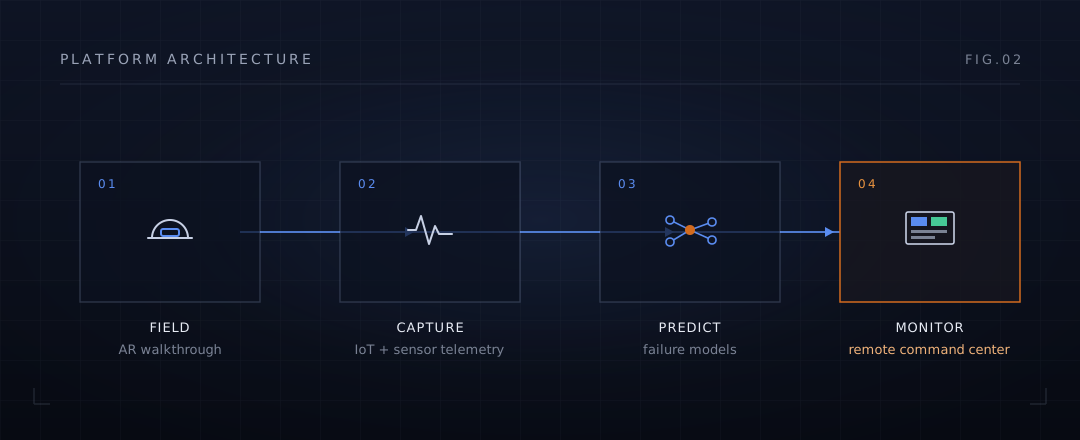
The win wasn't the headset. It was turning scarce expertise into something that scales across every plant, every shift, at once.
Crucially, we built for trust. Every prediction shows its evidence, the sensor trend behind the call, so a technician can agree, disagree, and teach the system. Adoption was designed in from week one: training, side-by-side rollout, and a deliberate choice to augment the expert, never to replace their judgment.
The outcome
Within the first year in production, AquaSight AR changed the economics of inspection. Unplanned outages fell as failures were caught in their early, cheap-to-fix stage, a median of eleven days before they would have taken a device offline. Routine drive-time collapsed as engineers inspected remotely and dispatched crews only when the data warranted it.
The plant stopped being a place you had to drive to. It became something you could read, anywhere, before it broke.
More quietly, the platform began to preserve something the utility had been losing: the instinct of its most experienced people, captured as data and shared with every crew that follows. That is the part no spreadsheet on day one could price, and the part American Water now runs on every day.