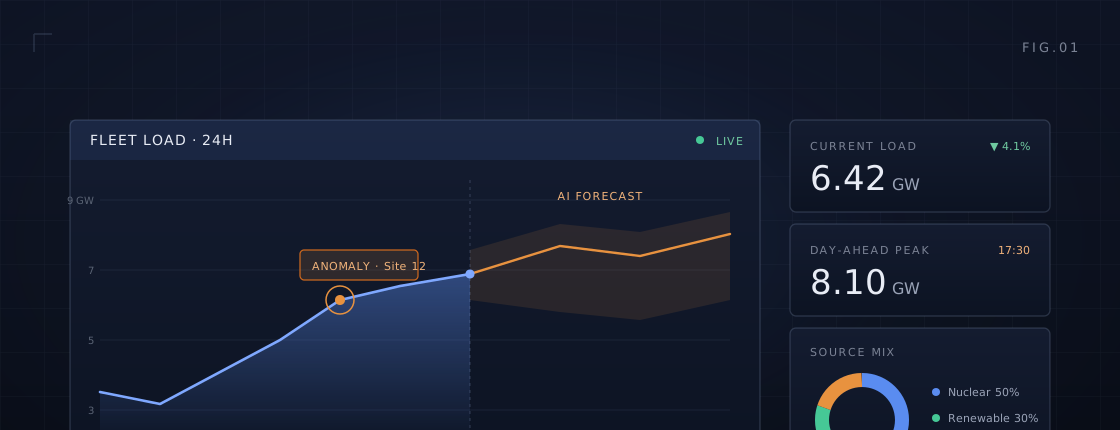
You can't manage what you can't see. The utility's energy consumption data lived in dozens of places: meters, SCADA historians, building systems, spreadsheets, and vendor portals. Getting a single, current picture of how much energy the fleet used, where, and why, meant stitching exports together by hand.
Reporting was backward-looking and slow. By the time a consumption report was assembled, the window to act on it had usually closed. There was no shared forecast, no early warning when a site drifted, and no easy way to tie consumption back to cost.
The challenge
Could the utility see and manage energy consumption across the entire fleet in one place, in real time, and put AI to work forecasting it, flagging waste, and trimming peak costs? The constraints were substantial: many data sources and formats, strict operational-technology security, and a wide range of users, from executives who wanted a single number to plant engineers who needed the load curve for one site.
The approach
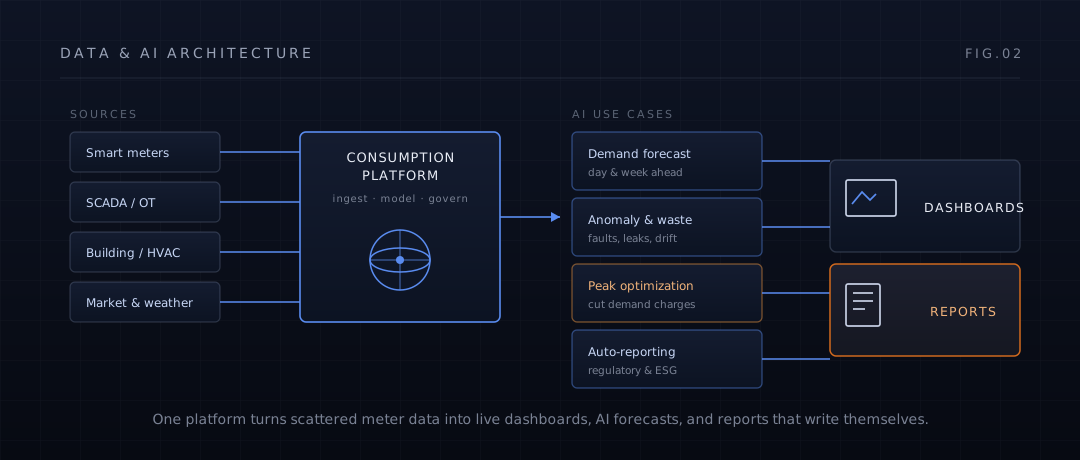
We built a single platform on top of the utility's data. It ingests consumption from meters, SCADA, building systems, and market feeds into one governed model, then surfaces it through dashboards tuned to each audience. On top of that data sits an AI layer: forecasting, anomaly detection, peak optimization, and automated reporting, all reading from the same source of truth.
The data was always there. It just never sat in one place where someone could act on it.
The outcome
Within the first year, the utility had a live, fleet-wide view of consumption that used to take days to assemble. Day-ahead forecasts let teams plan around peaks instead of reacting to them, anomaly detection caught waste and faults while they were still small, and the reports that once consumed days of analyst time now generate themselves.
Energy you can see is energy you can manage. One platform, one source of truth.
The platform is built to grow. New data sources, new AI use cases, and new reports plug into the same foundation, so the system that unified consumption this year is ready to optimize it next.